04. Express
A contact center in 5 minutes
A product built from zero on top of in house legacy technology, so a small business with no contact center experience could set up customer service in minutes, and telcos could resell it under their own brand.
- Client
- Express
- Role
- Design Lead
- Sector
- Contact center · SMB and telco white label
- Year
- 2023

North star
Have a contact center in 5 minutes.
Strategy
Tailored to the unique needs of small and medium businesses looking for a contact center with only the essential features. Every decision prioritised simplicity, speed and effectiveness.
01. Context
Our platform was built for large operations. Small businesses also needed to support their customers, but they had no idea how a contact center works: numbers, queues, channels, agents. At the same time, big telecom companies wanted a solution they could offer to the businesses they already serve, under their own brand.
02. The problem
A powerful but complex system, a legacy codebase never designed for self service, and a buyer who had never operated a contact center. The onboarding had to turn dozens of technical decisions into a few clear steps, from buying a number to connecting social media.
Business goal
Open a new market with small businesses and telco partners, reusing the technology we already had in house.
Customer goal
“Get my customers answered today, without having to understand how a contact center works.”
03. Insights
- 01
The buyer is the business owner, not an operations expert. Every step had to speak their language, not ours.
- 02
Most configuration could be decided for them. Smart defaults replaced choices nobody was ready to make.
- 03
The legacy code already supported most of the journey. Understanding it defined what we could expose quickly and what had to be rebuilt.
- 04
Telcos needed back office tools to onboard and support their own clients, and a product they could brand as theirs.
04. Strategy
Understand the buyer
Interviews and journey mapping with small business owners to learn their needs, fears and expectations before designing a single screen.
Map the legacy
Worked with engineering to read the in house system and decide what to reuse, simplify or hide behind the onboarding.
Onboard in steps
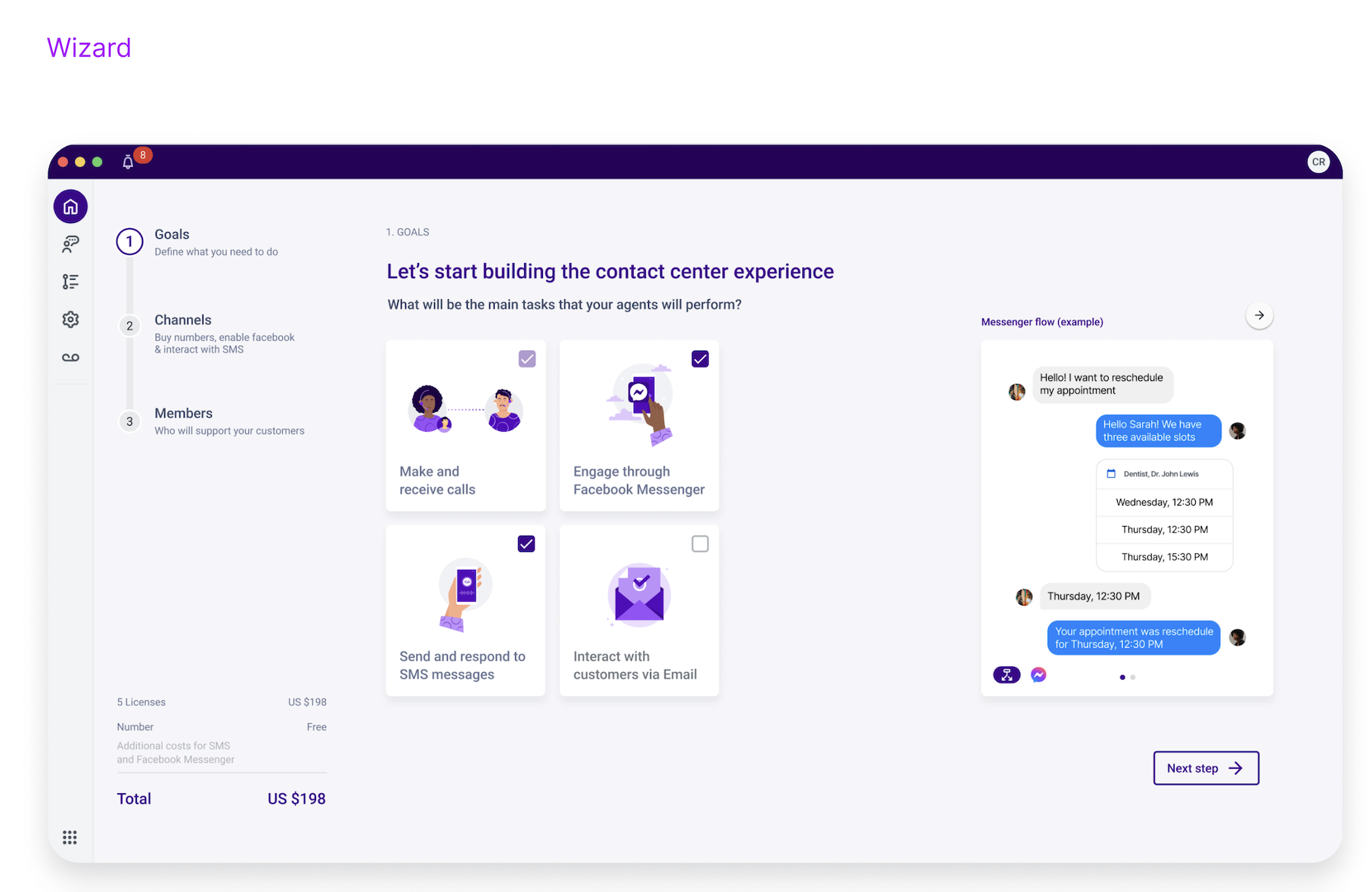
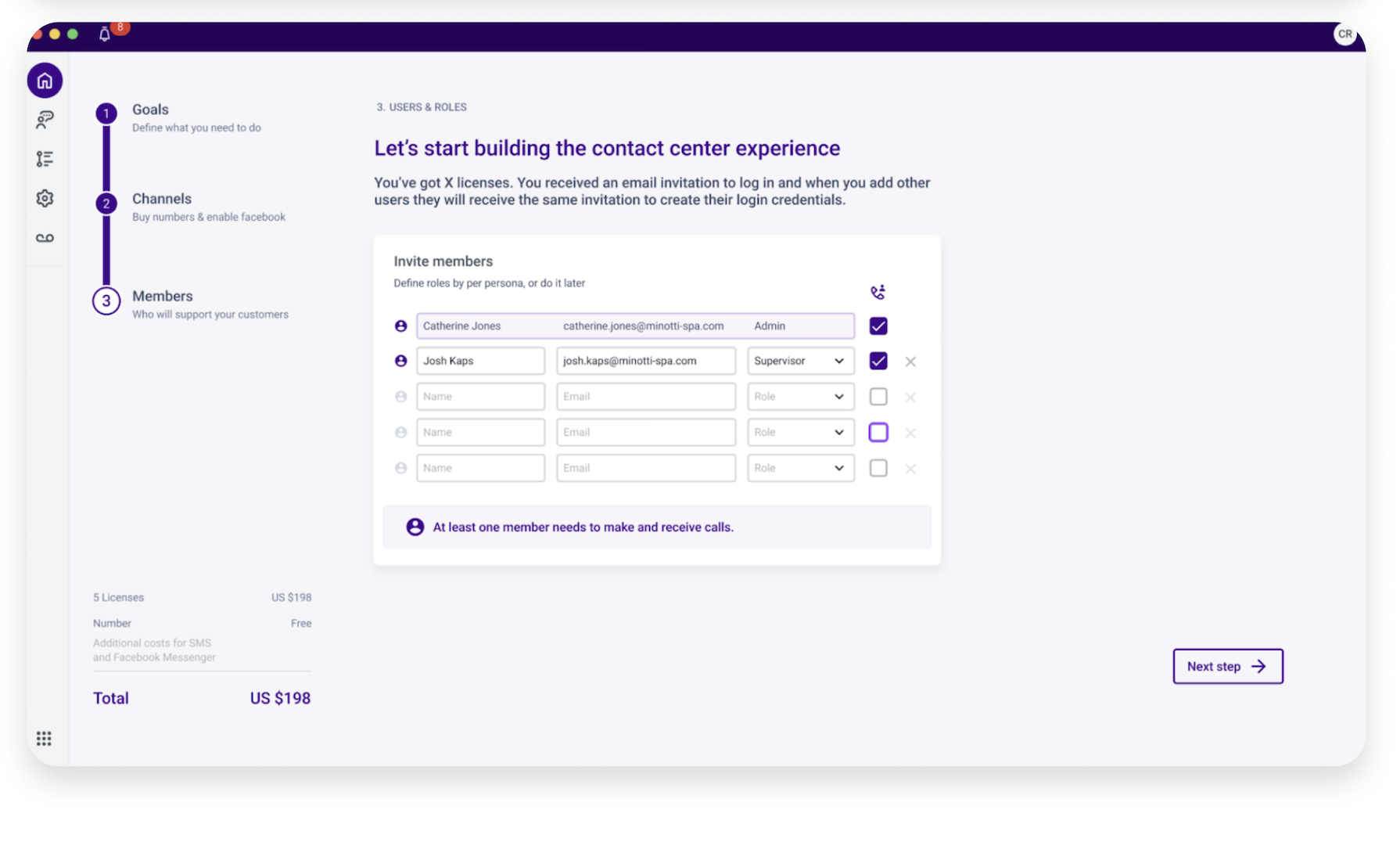
A guided setup: choose and buy a number, add your team, connect your channels and social media, go live.
Chapter 01 · Discovery
Who buys a contact center they do not understand?
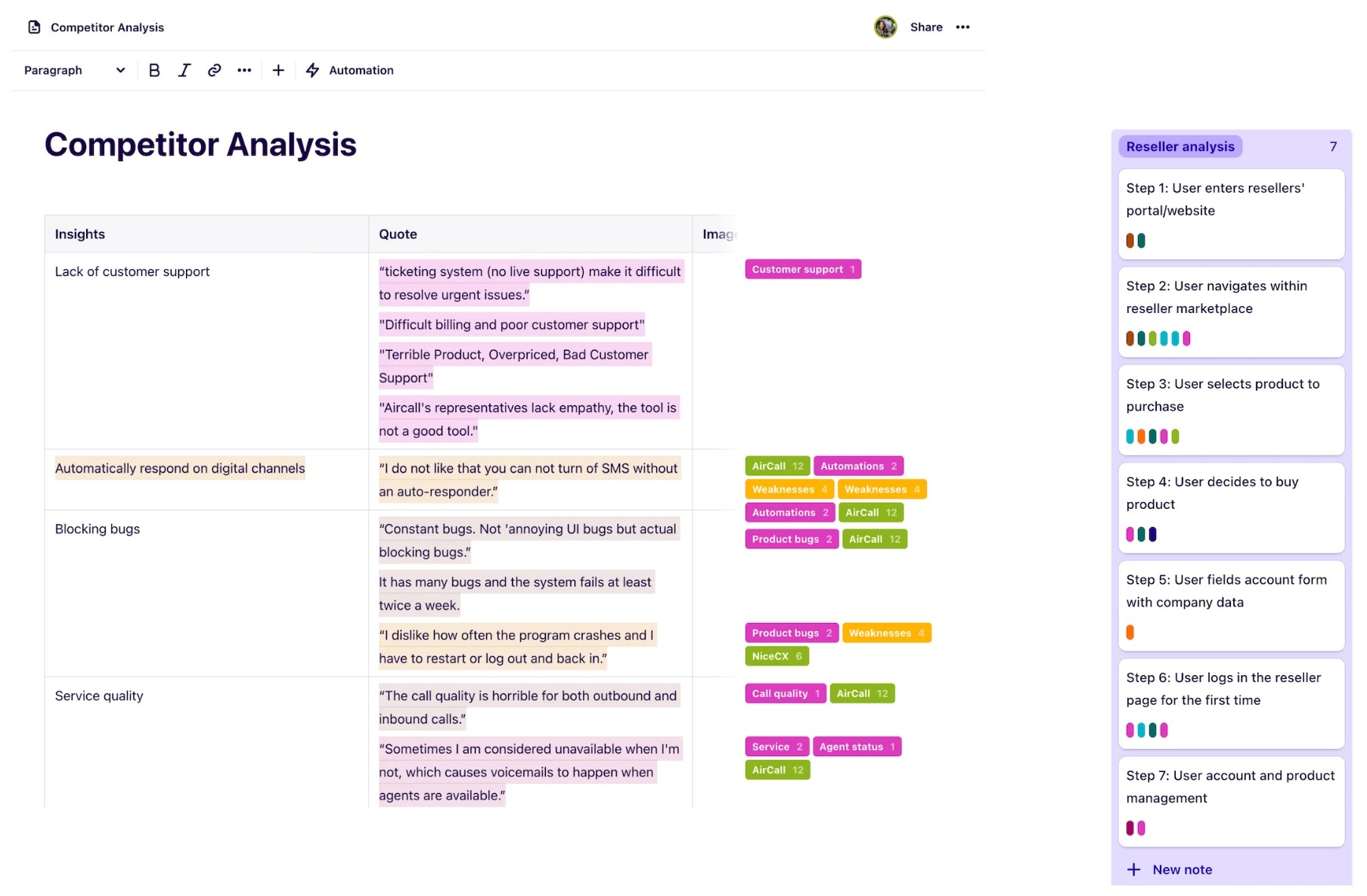
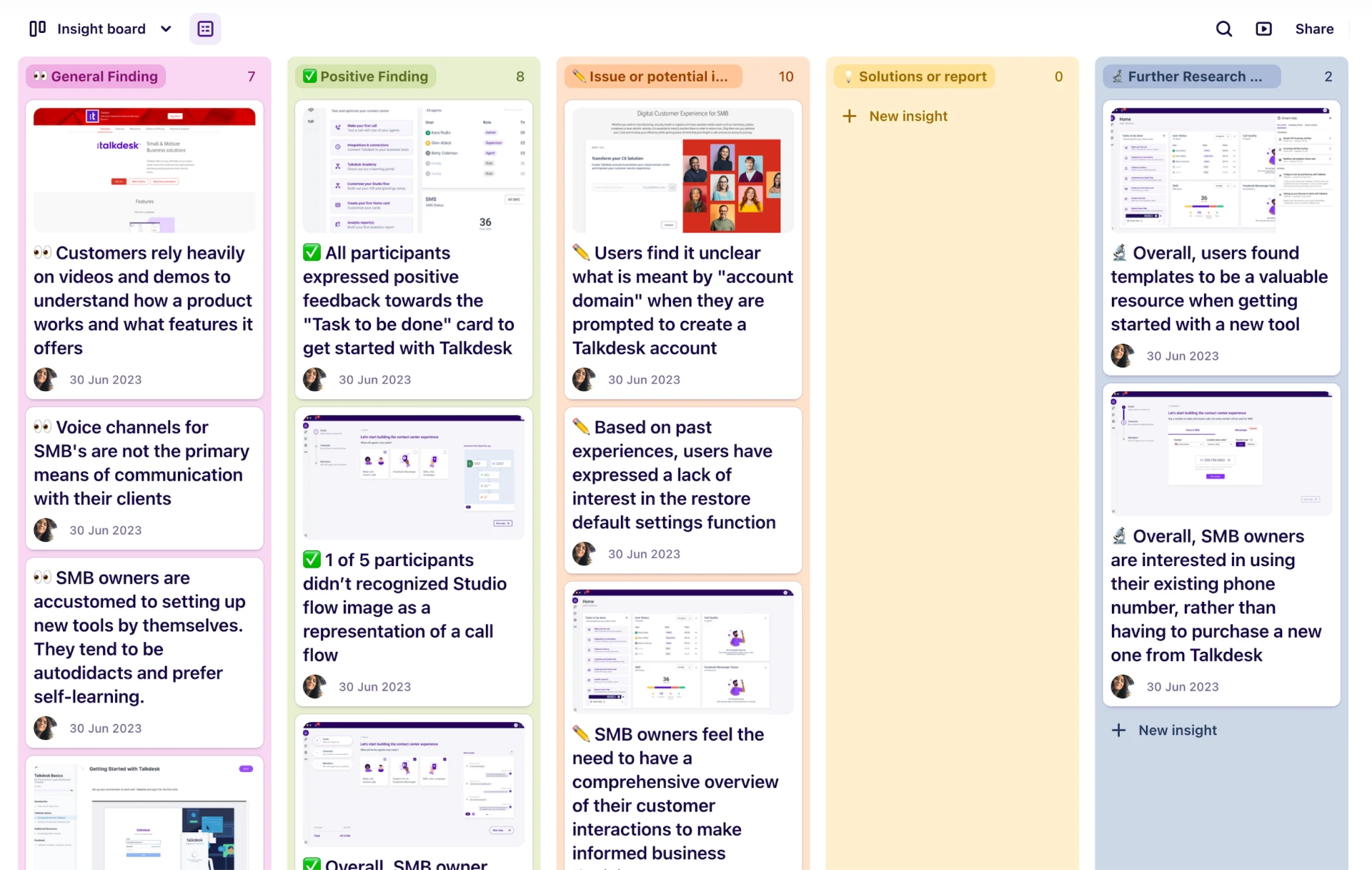
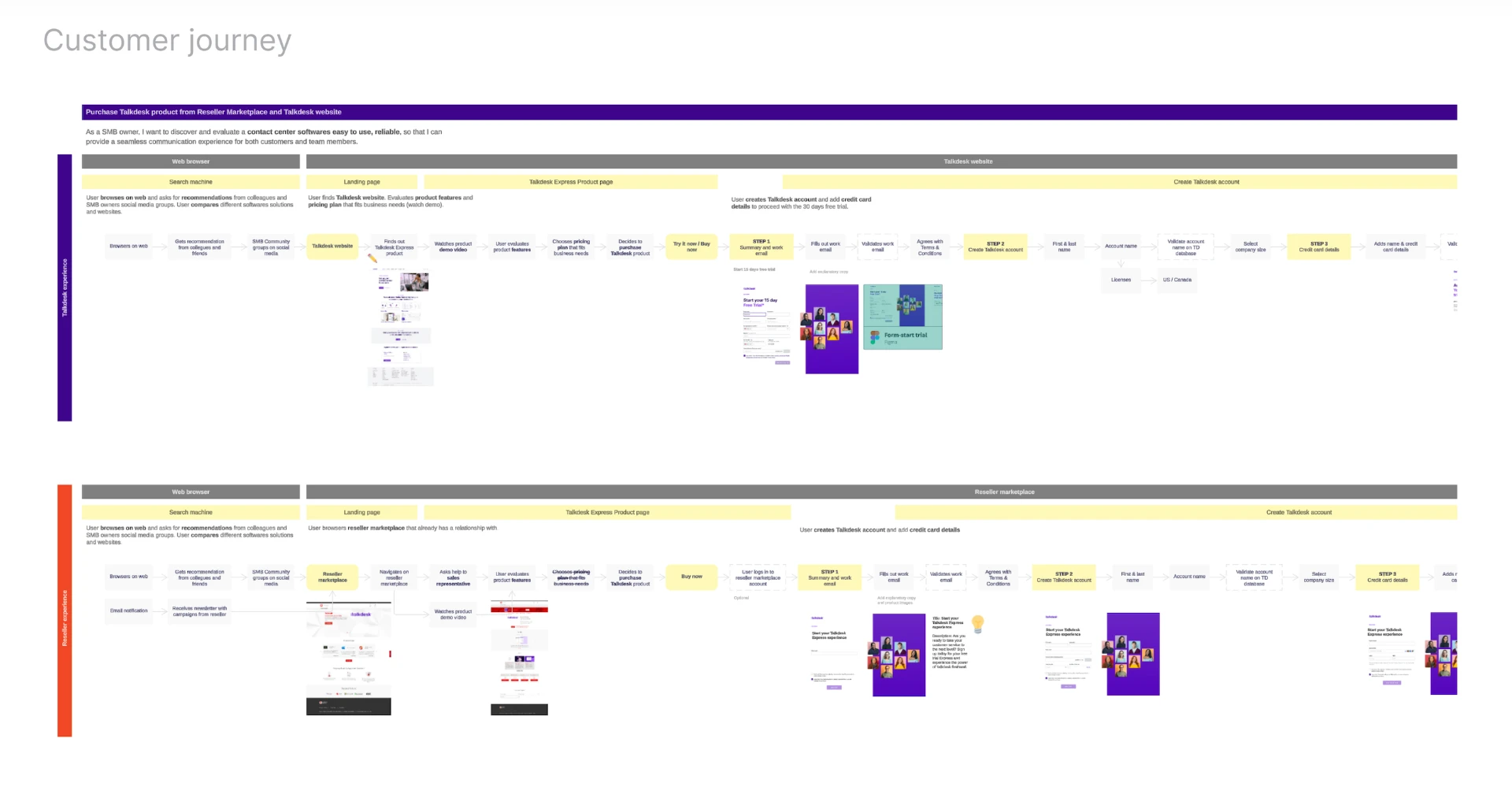
The project started with the buyer. Small business owners wanted their customers answered, not a lesson in queues and routing. Mapping their journey, and the journey of the telco teams that would sell and support the product, set the principles for everything that followed.
- 01Personas for the business owner, the agent and the telco back office
- 02Journey maps from first visit to the first customer answered
- 03A clear list of what the buyer should never have to decide
Chapter 02 · Onboarding
From buying a number to going live
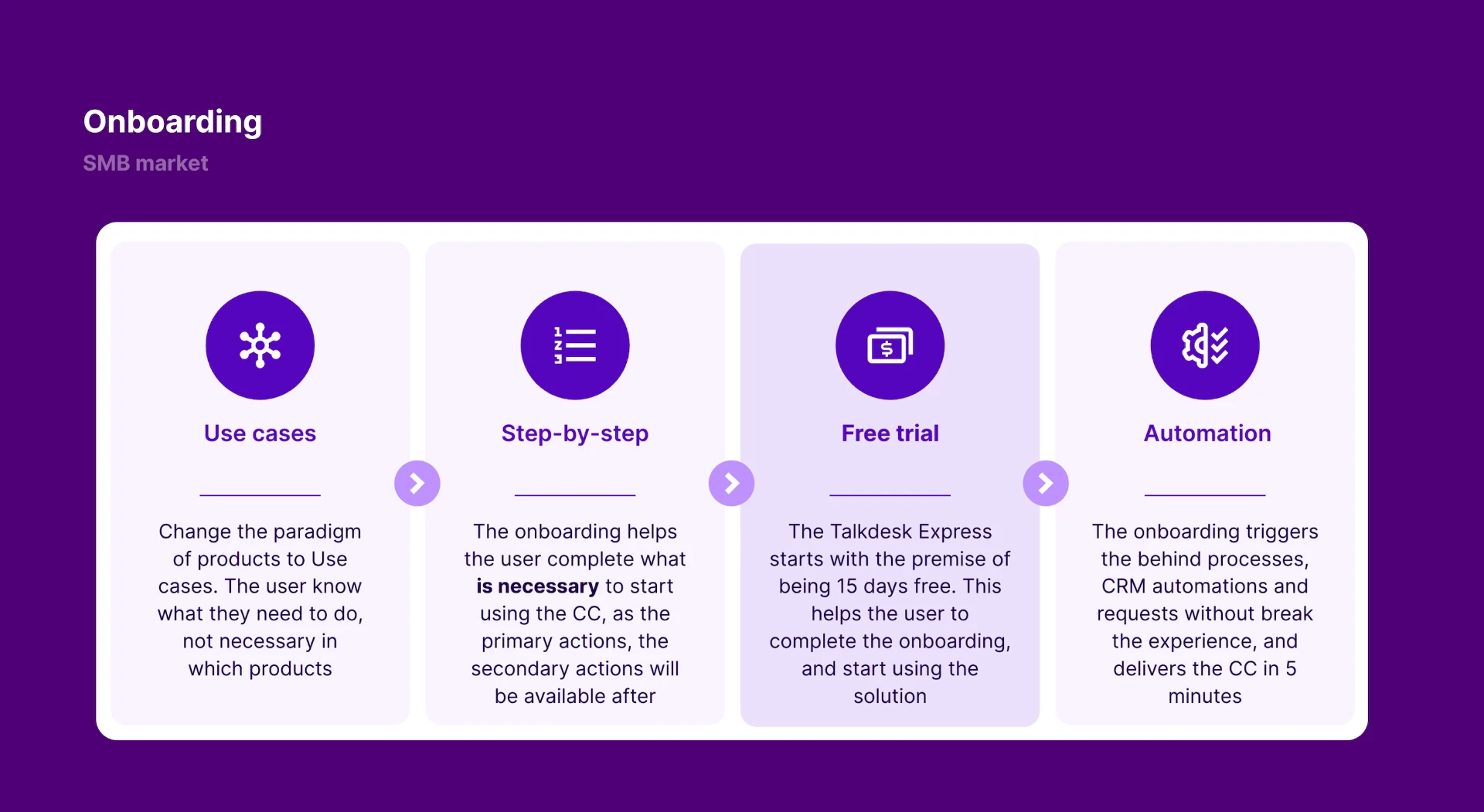
The setup became four clear steps: pick a number, invite the team, connect channels like phone, email and social media, and go live. Each step explains why it matters in plain words, and a preview shows the contact center taking shape as you go.
- 01One decision per step, with defaults that already work
- 02Social media and channels connected in a few clicks
- 03A live preview so the result is visible before launch
Chapter 03 · White label
One product, many brands
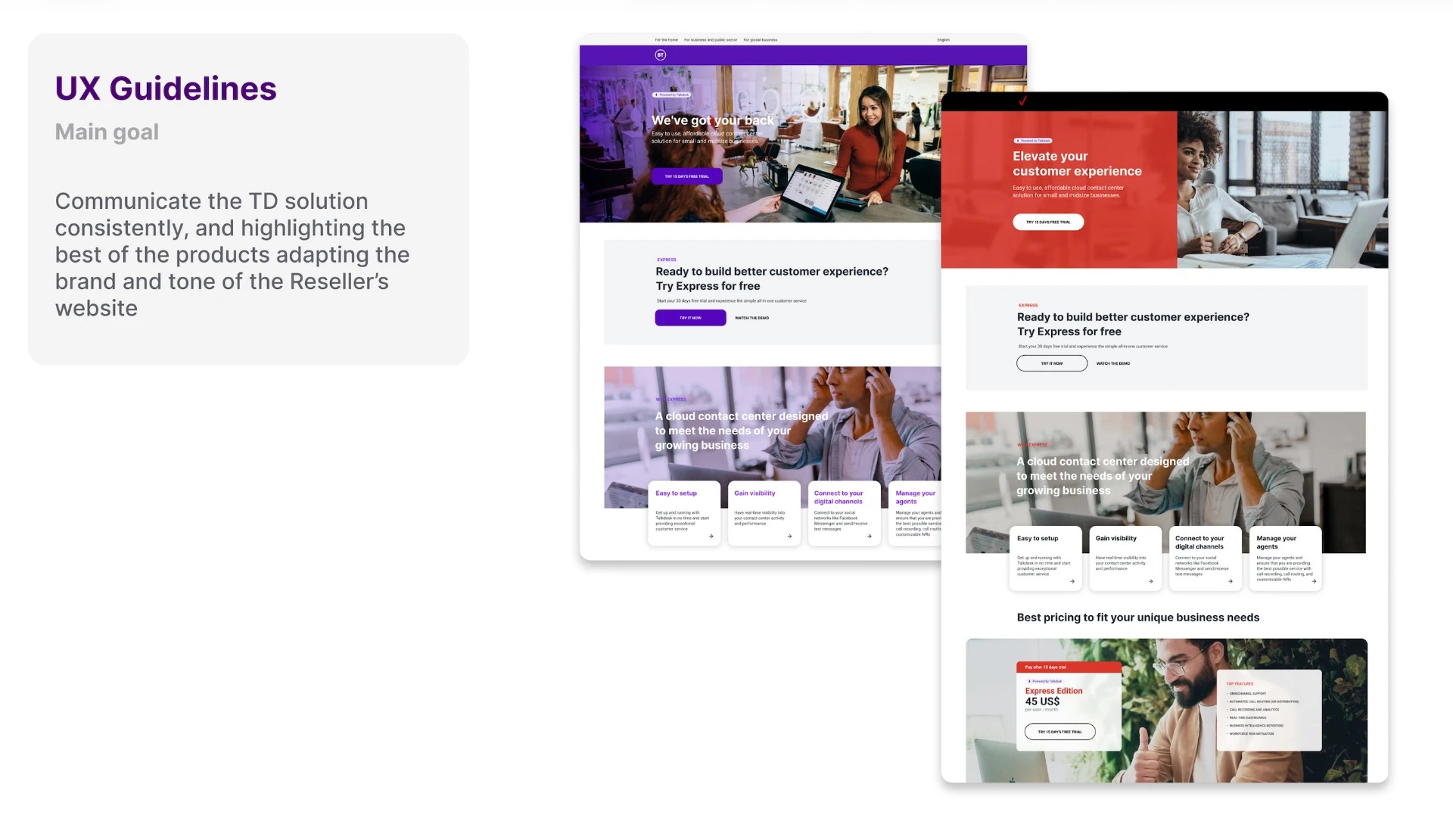
Telcos could offer the same experience to their business clients with their own logo, colours and tone. UX guidelines, a themeable component set and back office tools let partners onboard and support their clients without our team in the loop.
- 01Themeable design system for partner branding
- 02Back office flows for telcos to onboard and manage businesses
- 03UX guidelines so every branded version stays clear
Chapter 04 · Outcome
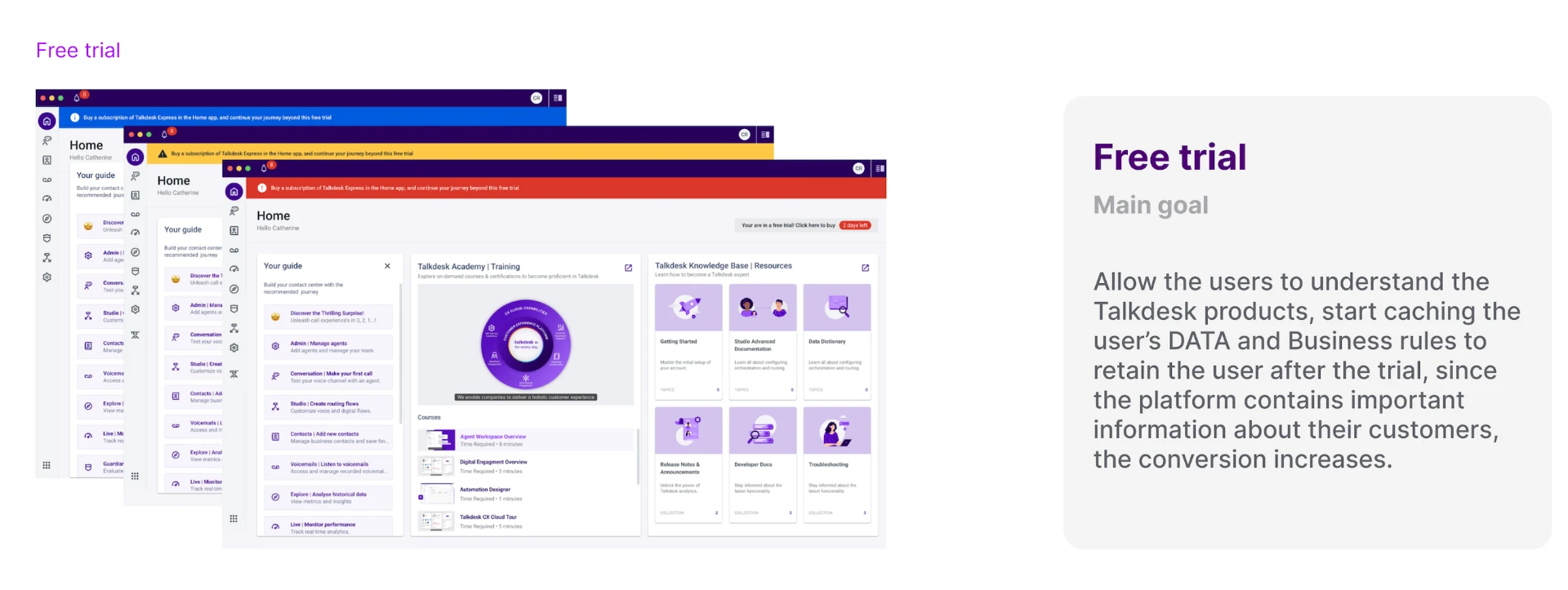
A home that keeps people after the trial
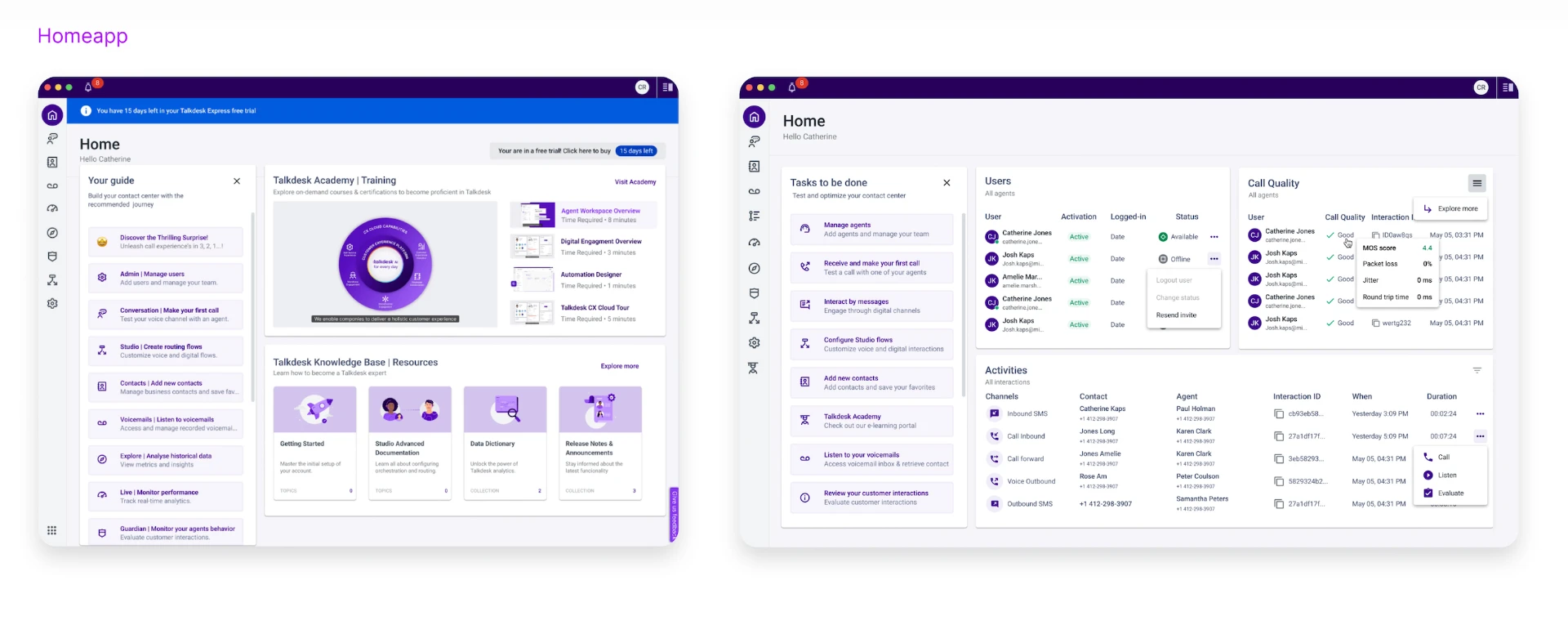
After setup, the home guides each business through its next tasks, training and the knowledge base, with live views of users, activity and call quality. The 15 day free trial lets owners bring their own data and rules into the product, so by the end of the trial the contact center already holds what matters to them, and converting is the natural next step.
- 01A personal guide with the next tasks to complete
- 02Users, activity and call quality in one view
- 03A free trial designed to build value worth keeping
05. Key decisions
Smart defaults over full control
Trade-offLess flexibility on day one, but a working contact center in minutes and room to grow later.
White label from the start
Trade-offMore design system work up front, but every telco could launch the product with its own brand.
Reuse the legacy, redesign the surface
Trade-offConstraints inherited from old code, but a launch in one year instead of a rebuild.
06. Outcome
Express launched one year after the project started, giving small businesses a contact center in minutes and telco partners a branded product to sell to their clients.
What I learned
“Simplicity in a complex system is a design decision and an engineering one. Understanding the legacy was as important as understanding the customer.”
Next case
Customer Experience Analytics